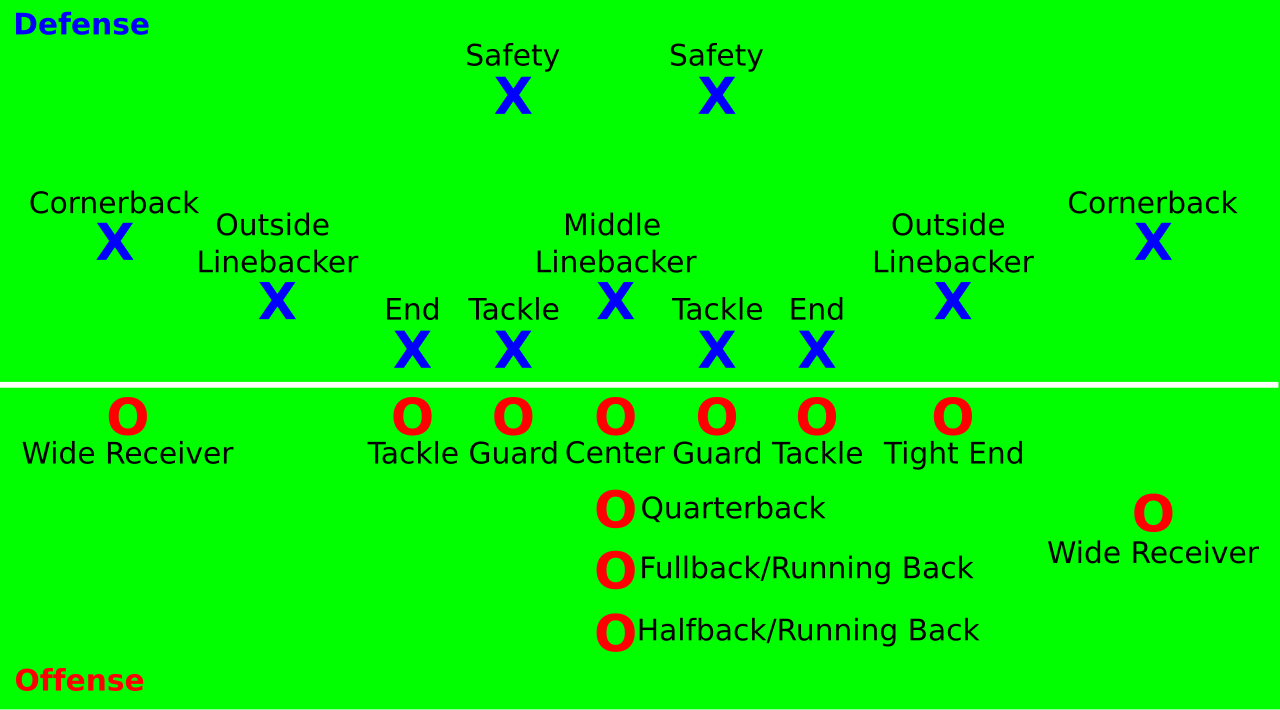
In the high-stakes world of American football, every position on the field plays a crucial role in a team's strategy. Among the most impactful and dynamic is the Defensive End (DE). Positioned at the outer edges of the defensive line, opposite the offensive tackles, these athletes are the spearhead of a defense, tasked with disrupting offensive plays, pressuring quarterbacks, and containing explosive runs. However, the specific demands and characteristics of a Defensive End can vary dramatically depending on the overarching defensive scheme employed by a team. Understanding these differences is key to appreciating the subtle complexities and strategic brilliance behind every snap.
Whether a team runs a 4-3 or a 3-4 defense, the Defensive End is indispensable. The role demands an exceptional blend of speed, power, agility, and technique to consistently overcome formidable offensive linemen. This article will delve into the distinct roles of Defensive Ends in both the traditional 4-3 and 3-4 defensive fronts, exploring their unique responsibilities, physical profiles, and the evolution of the position in the modern NFL.
The Core Role of a Defensive End: An Overview
At its heart, the Defensive End is an edge disruptor. Regardless of the scheme, their primary objective is to penetrate the offensive line and wreak havoc in the backfield. This involves several critical responsibilities:
- Quarterback Pressure and Sacks: On passing downs, the DE's main goal is to get to the quarterback, either by forcing a quick throw, hitting them, or bringing them down for a sack. This collapses the pocket and can derail an offense's passing game.
- Run Containment: Against running plays, Defensive Ends are responsible for setting the "edge." This means preventing running backs from gaining significant yards outside the tackles, often forcing them back inside where linebackers and other defensive linemen can make a tackle.
- Disrupting Plays: Even if they don't get a sack or make the tackle, a DE's presence can force quick decisions, throw off timing, and generally make life difficult for the offensive line and skill players.
To achieve these objectives, Defensive Ends often start in a three-point stance, poised to explode off the line of scrimmage. Their initial burst and ability to read whether the play is a run or a pass are fundamental to their success. This pivotal role makes the Defensive End one of the most exciting and critical positions on the field, often dictating the pace and outcome of games. For a deeper dive into the position's nuances, consider reading Defensive End Explained: Role, Schemes, and Evolution.
The 4-3 Defensive End: The Agile Edge Rusher
In a 4-3 defense, the front features four defensive linemen and three linebackers. Here, the two Defensive Ends are typically the stars of the pass rush. This scheme is designed to leverage their speed and agility to get after the quarterback directly.
Characteristics and Responsibilities of a 4-3 DE:
- Physical Profile: 4-3 Defensive Ends are often lighter and more athletic, typically weighing between 250-270 pounds and standing 6 feet 4 inches to 6 feet 6 inches tall. Their build emphasizes explosiveness and the ability to "bend" around the edge.
- Primary Focus: Pass Rushing: Their core responsibility is to generate pressure and sacks. They utilize a diverse array of pass-rush moves, including speed rushes, bull rushes, spin moves, and various hand techniques to defeat offensive tackles.
- Run Defense Role: While pass-rushing is paramount, 4-3 DEs must still be sound in run defense. They are expected to maintain outside leverage, set the edge, and force runs back inside to the linebackers, rather than being primary interior run-stuffers. They focus on containment and shedding blocks to pursue the ball carrier.
- Impact: A dominant 4-3 Defensive End can single-handedly alter game plans, forcing offenses to dedicate extra blockers or adjust their play calls to neutralize the threat.
Consider a player like a young Von Miller or Dwight Freeney, whose primary mission was to get to the quarterback with blistering speed and technique. Their ability to turn the corner and disrupt the pocket is what defines the 4-3 Defensive End.
The 3-4 Defensive End: The Robust Run-Stopper
In stark contrast, the 3-4 defense employs three defensive linemen and four linebackers. In this alignment, the Defensive Ends have a significantly different profile and set of responsibilities compared to their 4-3 counterparts. They are often less about individual sack numbers and more about facilitating the success of the linebackers.
Characteristics and Responsibilities of a 3-4 DE:
- Physical Profile: 3-4 Defensive Ends are typically heavier, stronger, and more robust. They often weigh in the range of 280-300 pounds, prioritizing raw power and the ability to anchor against multiple blockers.
- Primary Focus: Run Stopping and Gap Control: Their main job is to control blockers in multiple gaps, effectively taking on double teams to prevent the offensive line from reaching the linebackers. They are the defensive line's immovable objects, designed to clog running lanes and maintain the integrity of the defensive front.
- Pass-Rush Duties: While they contribute to the pass rush, their role is more about pushing the pocket from the interior and occupying blockers. The primary pass-rushing responsibilities in a 3-4 scheme usually fall to the outside linebackers (OLBs), who often line up on the edge.
- Impact: A successful 3-4 Defensive End might not rack up high sack totals, but their effectiveness is measured by how well they tie up blockers, free up their linebackers to make tackles, and stonewall inside run plays. They do the "dirty work" that allows others to shine.
Think of players like J.J. Watt during his time in Houston (though he was an anomaly with pass-rush production) or a more traditional big, powerful interior presence. Their role is about strength at the point of attack and disrupting the offensive line's blocking scheme to open lanes for the linebackers to exploit.
A Shifting Landscape: The Evolution of the Defensive End
The NFL is a league of constant evolution, and the Defensive End position is no exception. While the distinct roles in 4-3 and 3-4 schemes remain foundational, modern football often blurs these lines. Teams are increasingly adopting hybrid fronts and seeking versatile players who can contribute in multiple ways.
- Emphasis on Versatility: Today's ideal Defensive End is often a "tweener" – a player with the agility of a 4-3 edge rusher but enough strength and power to hold up against the run like a 3-4 lineman. This adaptability is crucial in an era where offenses frequently shift formations and personnel.
- Size Trends: The physical profile of the Defensive End has seen fluctuations. While average sizes surged through the early 2010s (reaching around 283 pounds by 2013), recent trends suggest a slight decrease to approximately 270 pounds as of 2025. This adjustment reflects a strategic balance: teams want players who can still anchor against the run but possess the quickness to generate consistent pass rush, especially given the league's stable sack rates of roughly 2.5 per game. This ongoing adaptation highlights the dynamic nature of the position, as detailed in Defensive End Evolution: Size, Speed, and Scheme Trends.
- Scheme Adaptation: Many defensive coordinators now employ "multiple" fronts, meaning they might run a 4-3 on one play and morph into a 3-4 look on the next, often depending on down, distance, and opponent. This demands Defensive Ends who can execute both roles effectively, whether it's dropping into a two-point stance as an outside linebacker or putting a hand in the dirt to anchor against a run.
The narrative of Dylan Horton, the Houston Texans defensive end who stepped away for health reasons and returned in remission, exemplifies the personal challenges and dedication these athletes face. His journey back to the game he loves underscores the commitment required, regardless of scheme, to excel at such a physically demanding position.
Conclusion
The Defensive End is a cornerstone of any effective defense, yet their precise responsibilities are heavily influenced by the team's chosen scheme. The 4-3 DE is primarily a lean, agile pass-rushing specialist, focused on collapsing the pocket and disrupting the quarterback. In contrast, the 3-4 DE is a robust, powerful run-stopper, tasked with occupying blockers and freeing up linebackers to make plays. While these traditional distinctions provide a clear framework, the modern NFL increasingly values versatility, leading to an evolution in the ideal Defensive End profile. Understanding these differing roles not only enriches the appreciation of defensive strategy but also highlights the incredible athleticism and football IQ required to excel at one of the game's most critical positions.